Likith Nadendla

Likith

ML / DevOps Engineer & Cofounder of Sync Labs — AI lip-sync platform built on MuseTalk. Architecting secure, cloud-native systems at scale.

United States
503-454-6925
likith@likith.net

About Me

ML/DevOps Engineer & Cofounder of Sync Labs, an AI lip-sync platform processing video at scale. Architect and operationalize secure, cloud-native ML systems with deep expertise in automating pipelines, orchestrating data workflows, and hardening infrastructure across AWS and Kubernetes. Experienced optimizing inference performance, building observability systems, and enforcing compliance for regulated industries (healthcare, enterprise). Skilled in designing CI/CD guardrails, containerizing workloads, and ensuring reliability, reproducibility, and traceability across the ML lifecycle.

ML Systems Architecture

Architecting and deploying secure, cloud-native ML systems with automated pipelines and data workflows

Infrastructure & DevOps

Hardening infrastructure across AWS and Kubernetes with CI/CD guardrails and infrastructure-as-code

Compliance & Monitoring

Enforcing compliance for healthcare and retail with comprehensive observability and monitoring systems

Technical Skills

Cloud & DevOps

Programming

Databases & Data Ingestion

Frameworks & Libraries

Tools & Platforms

Infrastructure & Networking

Machine Learning & Modeling

Observability & Reliability

Other Skills

Projects

Projects

A timeline of selected projects delivering ML, analytics, and cloud-native systems with measurable impact.

Sync Labs – AI Lip Sync Platform

Sync Labs: Hyper-Realistic AI Lip Sync for Creators & Enterprises

CofounderStatus: In MarketNow in Early AccessVisit →

Built an AI-powered lip-sync platform enabling creators and enterprises to generate hyper-realistic talking-head videos from any face and audio track. Powered by MuseTalk v1.5 + Whisper for multi-language automatic speech recognition and perfect synchronization, running on GPU-accelerated cloud infrastructure.

  • Architected end-to-end video processing pipeline on AWS (ECS/Fargate, S3, Lambda) supporting MP4, MOV, AVI, FLV, MKV formats up to 200 MB with 2–3 minute turnaround
  • Integrated MuseTalk v1.5 model (VAE latent encoding, BiSeNet face blending) with Whisper for automatic language detection and audio phonetic analysis
  • Implemented multi-language audio support with Whisper embeddings, automatically detecting language and optimizing sync parameters per language
  • Designed secure, privacy-first architecture: automatic file deletion after processing, 7-day output retention, encrypted storage with strict PHI/PII isolation
  • Built cloud processing layer optimizing GPU utilization and throughput for viral adoption—thousands of videos processed daily at sub-3-minute latency
  • Deployed pre-built AI avatars (Jessica, Jack, Sarah) with one-click video generation, enabling creators to start without source footage
  • Engineered robust error handling, graceful degradation, and user-friendly UI for seamless content creation workflows
  • Currently available: 3 free videos per account (no card required); Pro plan with unlimited videos, multi-language batch processing, and API access (coming soon)

ClusterDuck IoT Mesh

Decentralized IoT Mesh Network for Disaster Resilience

August 2021 – December 2021Status: Completed

Implemented a decentralized IoT mesh communication network using the open-source Cluster Duck Protocol to simulate resilient connectivity during disaster scenarios.

  • Deployed ESP32-based IoT nodes running the Cluster Duck firmware to form a LoRa-based mesh network with Wi-Fi client access
  • Configured gateway nodes (Papa Duck architecture) to aggregate telemetry and forward messages to centralized endpoints via available backhaul connectivity
  • Evaluated mesh formation behavior including node discovery, routing, and automatic rerouting during simulated node failures
  • Tested network resilience under various failure scenarios to validate disaster communication capabilities

Decision-Intelligence Task System

Cognitive Load-Reducing Task Engine

Personal experimental projectStatus: In development

Decision-first task model where parent tasks hold deadlines while subtasks remain unscheduled prep steps—mirroring real-world prep before execution.

  • Task structuring: only parents have date/time; subtasks are ordered, fully editable preparation steps to avoid artificial micromanagement.
  • Suggested prep: deterministic keyword/pattern detection with curated templates; “system suggests structure, user owns the graph.”
  • Decision engine: deterministic scoring of urgency, priority, readiness, remaining prep; outputs constrained Top-3/Top-5 actionable list to reduce decision fatigue.
  • Dependency handling: blocked parents promote subtasks; conflicts surface warnings without auto-mutation.
  • Execution layer: optional deep-focus sessions with timer + server persistence; streaks are derived from completion events (no manual input).
  • Stack: Next.js + API routes + Prisma + SQLite; all business logic server-side for explainability with a clear path to layer AI later.

Outcome: an explainable, stable decision-intelligence system that optimizes for “what to do next,” not just task storage.

Reachy Mini AI Assistant

Smart AI Assistant with Physical Interaction

Personal experimental projectStatus: In development

Reachy Mini humanoid assistant on Raspberry Pi 4 with CV + NLP for natural human-robot interaction.

  • Voice + NLU pipeline for real-time speech understanding and responses.
  • Gesture control algorithms for expressive arm/head movement and context-aware behaviors.
  • Computer vision for object recognition/tracking driving interactive routines.
  • Modular AI pipeline with customizable personality and response policies.
  • Monitoring hooks into the multi-cloud dashboard for performance, thermals, and connectivity.

Impact: bridges digital intelligence with tangible interaction for practical robotics assistants.

Reachy Mini Assistant - Front View
Reachy Mini Assistant - Side View

Offline Text-to-Speech AI Model

Privacy-First Offline TTS System

Personal experimental projectStatus: In testing

Jetson Nano-based offline TTS pipeline optimized for privacy and sub-second inference.

  • End-to-end GPU-accelerated inference with TensorFlow/PyTorch on CUDA.
  • Custom-trained neural voices tuned for the target domain and edge constraints.
  • Efficient training/evaluation loop plus thermal/resource monitoring.
  • 100% offline operation—no cloud dependency for privacy-sensitive contexts.
  • Integrated into multi-cloud dashboards to track inference latency, accuracy, and device health.

Impact: proves production-quality voice synthesis on embedded hardware for secure deployments.
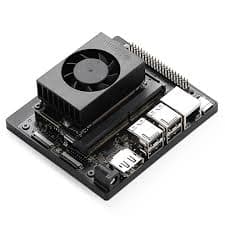
Jetson Nano TTS System Setup

Experience

Professional Journey

A timeline of my professional experience and career milestones in cloud technology and software development.

2024-Present

ML Ops Engineer — Ayumetrix

Portland, OR
April 2024 — Present

Designed and built a Python-based AI agent platform on AWS to power intelligent decisioning, personalization, and real-time recommendations at scale. The system focused on agent orchestration, system reliability, and production-grade deployments using containerized services, CI/CD pipelines, and strong observability.

Designed and implemented AI agent–driven workflows in Python to orchestrate offline model training, real-time inference, feature freshness validation, and automated retraining decisions
Built and maintained agent orchestration services that coordinated multiple ML components (embedding generation, candidate retrieval, ranking, and response composition) through well-defined system boundaries
Developed Python-based backend services running in Docker containers, deployed on AWS (ECS/SageMaker), supporting high-throughput, low-latency inference workloads
Implemented CI/CD pipelines to build, test, scan, and deploy containerized agent services across multiple environments (dev, staging, prod) with safe rollout strategies
Designed system-level architecture for agent communication, dependency management, and failure isolation, balancing performance, scalability, and operational simplicity
Integrated AWS services (IAM, S3, VPC, CloudWatch, Secrets Manager) to ensure secure execution of agent workflows and controlled access to model artifacts and features
Established comprehensive observability for agent systems, including metrics, logs, and traces to monitor agent execution latency, throughput, error rates, and downstream dependencies
Defined and enforced SLIs/SLOs for critical agent pathways, performing root-cause analysis on latency regressions and reliability issues
Collaborated closely with engineers and a principal-level architect to review designs, make architectural tradeoffs, and evolve the system toward higher scalability and maintainability

2023

DevOps/MLOps Engineer — Core Defender AI

Portland, OR
April 2023 — February 2024

Built and operated a HIPAA-compliant laboratory data and MLOps platform to ingest and normalize HL7 test results, enable reproducible ML-driven analytics, and automate secure reporting for partner labs and patients, with strict PHI isolation, auditability, and operational reliability.

Architected and operated a HIPAA-compliant laboratory data and ML analytics platform ingesting HL7 records from LIS systems and streaming sources, supporting external partner labs and direct patient result delivery
Designed multi-stage data pipelines (ingestion, validation, normalization, feature engineering, ML scoring, and reporting) using Apache Airflow and AWS Step Functions, ensuring reliable dependency management and mixed SLA support
Implemented schema validation and data quality gates using Great Expectations to prevent malformed or non-compliant assay data from entering downstream ML and reporting workflows
Built reproducible ML training pipelines with drift-triggered retraining on ECS (Fargate and EC2), prioritizing model accuracy, explainability, and auditability over inference speed
Established experiment tracking and model lifecycle management using MLflow, enabling full traceability of datasets, features, hyperparameters, metrics, and model artifacts for compliance and audits
Implemented dataset versioning via immutable S3 snapshot manifests, ensuring deterministic reproduction of historical ML runs and regulatory audit readiness
Designed an offline feature store using S3 (Parquet) and AWS Glue, with optional DynamoDB storage for latest feature access during scoring and report generation
Automated ML-driven PDF report generation triggered by DynamoDB Streams, securely storing artifacts in S3 and exposing results via controlled API-based downloads
Enforced strict PHI separation, encryption, role-based and per-partner access controls, and logging policies that explicitly prevented PII and test result leakage
Built comprehensive observability and incident response workflows using Datadog, CloudWatch, and PagerDuty, supported by documented runbooks to improve on-call readiness and reduce mean time to recovery

2019-2022

Linux System Administrator — Hexagon R&D India

Hyderabad, India
May 2019 — August 2022

Administered Linux infrastructure supporting GIS research environments and geospatial compute workloads

Administrated Linux servers for geospatial compute, optimizing system parameters for GIS data processing
Implemented user/group policies and RBAC for research teams, improving accountability and system stability
Migrated legacy desktop nodes to centralized Linux servers, improving maintainability and resource utilization
Provided tier-2 support for GIS modeling tools, build tooling, and CI pipelines; created troubleshooting documentation
Automated health checks, log analysis, and maintenance using Bash scripting, reducing manual intervention
Configured NFS mounts, repositories, and package mirrors; collaborated on OS hardening and security practices

Education

Academic Journey

My educational foundation in computer science, cybersecurity, and advanced technologies that shaped my career.

2022-2024

Master of Science in Computer Science

Pace University - Seidenberg School, New York City
Sep 2022 — May 2024

Specialized in cutting-edge technologies and advanced computer science concepts with focus on practical applications.

Data Engineering & Analytics
Cloud Computing & Infrastructure
Machine Learning & AI
Software Development & Systems Design
Pace University Logo

2020

Cyber Security Certification

Indian Dutch Cybersecurity School IDCSS
Feb 2020 — Oct 2020

Specialized certification program focusing on international cybersecurity frameworks and strategic security analysis.


Cyber Diplomacy & International Relations
Threat Intelligence & Risk Assessment
Security Policy & Strategic Analysis
Cross-Border Security Coordination
The Hague Centre for Strategic Studies - IDCSS Partner
Government of Telangana - IDCSS Partner

2017-2021

Bachelor of Technology in Computer Science

Vardhaman College of Engineering (VCEH), Hyderabad
May 2017 — Apr 2021

Comprehensive undergraduate program establishing strong foundation in computer science fundamentals and practical applications.

Software Development
Database Management
Security & Risk Management
Business Intelligence & Process Optimization
Vardhaman College of Engineering Logo

Blog

Coming Soon

Insightful articles about ML, DevOps, cloud architecture, and engineering best practices coming soon.

Get In Touch

I'm always interested in hearing about new opportunities and exciting projects. Whether you want to discuss cloud solutions, data analytics, or software development, feel free to reach out!

Location

United States